
Outdoor saunas bring the traditional sauna experience into the backyard, combining a dedicated sauna structure with the flexibility to install it away from your home’s interior living space. They range from compact barrel saunas and prefabricated cabins to large luxury sauna buildings with changing rooms, porches and panoramic windows.
This guide explains the different types of outdoor saunas, what they cost, foundation and electrical requirements, heater options, sizing and the most important things to consider before buying one for your property.
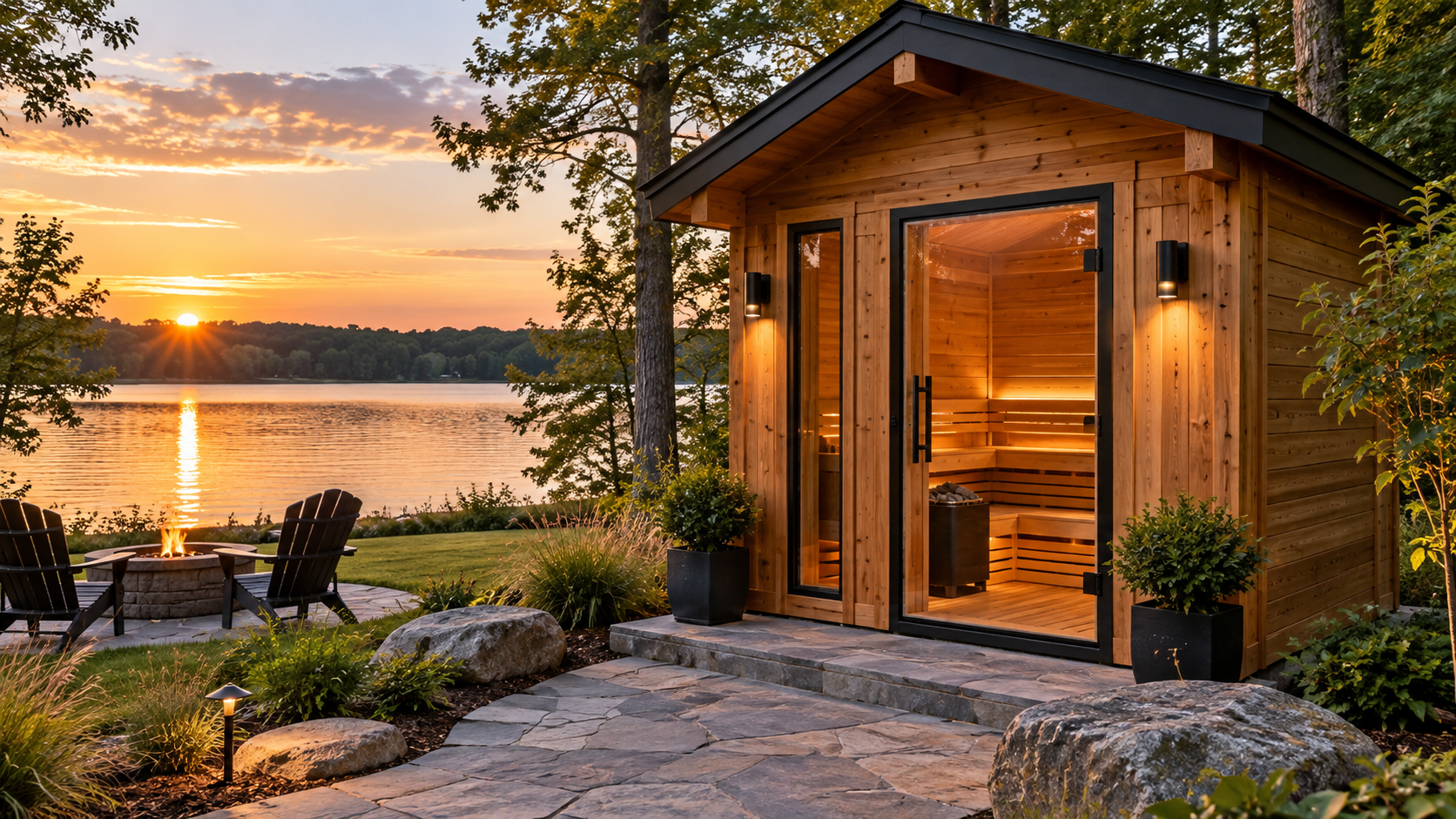
What Is an Outdoor Sauna?
An outdoor sauna is a freestanding sauna designed to remain outside year-round. Unlike an indoor sauna that uses space within a home, an outdoor sauna has its own exterior structure and must be built to handle weather, moisture and changing temperatures.
Outdoor saunas can use electric or wood-burning heaters and are available in several designs, including traditional cabin saunas, barrel saunas and larger custom-built structures. Some are delivered as prefabricated kits for on-site assembly, while others arrive partially or fully assembled.
The biggest advantage of an outdoor sauna is flexibility. You can create a dedicated sauna space without sacrificing an interior room, and larger properties may allow the sauna to become part of a backyard, pool or outdoor-living area.
Types of Outdoor Saunas
Outdoor saunas come in several different shapes and construction styles. The best choice depends on your available space, budget, preferred sauna experience and how permanent you want the installation to be.
Outdoor Cabin Saunas
Cabin-style saunas resemble small traditional buildings and usually provide the most conventional interior layout. Their straight walls and ceilings make it easier to incorporate multiple bench levels, windows, changing areas and other features.
Barrel Saunas
Barrel saunas use curved walls made from interlocking wood staves. Their compact shape makes them popular for backyards, and many are sold as kits that can be assembled on a prepared base. Interior space can be more limited than in a similarly sized cabin sauna because of the curved walls.
Pod and Pod-Style Saunas
Pod-style saunas combine some of the curved design of a barrel sauna with a taller interior profile. The additional height can provide more usable interior space while maintaining a distinctive outdoor-sauna appearance.
Custom Outdoor Saunas
A custom outdoor sauna can be designed around a particular property, size or layout. Custom construction offers the most flexibility for features such as large windows, multiple bench levels, changing rooms and covered entrances, but it is generally the most expensive option.
How Much Does an Outdoor Sauna Cost?
Outdoor saunas typically cost more than small indoor or infrared saunas because you’re purchasing or building a complete exterior structure. For initial planning, prefabricated outdoor sauna kits commonly range from about $5,000–$15,000+, while larger premium or custom outdoor saunas can cost considerably more.
The purchase price is only part of the budget. Outdoor installations may also require a foundation or prepared base, electrical service, delivery, assembly and site preparation. For that reason, a reasonable planning range for a complete outdoor sauna project is about $6,000–$20,000+.
| Cost Item | Typical Range |
| Outdoor sauna / kit | $5,000–$15,000+ |
| Foundation / site preparation | $500–$3,000+ |
| Electrical work | $500–$2,500+ |
| Professional assembly / installation | $1,000–$5,000+ |
| Delivery / freight | $200–$2,000+ |
| Typical complete project | $6,000–$20,000+ |
These are general planning ranges rather than quotes, and not every project will require every expense listed above. A homeowner assembling a sauna kit on an existing suitable base may spend considerably less on installation than someone adding a large sauna that requires site work, a new foundation and a long electrical run.
Before comparing outdoor sauna prices, check whether the advertised price includes the heater, controls, roofing, delivery and assembly. A lower-priced kit can become considerably more expensive once those items are added separately.
For a broader comparison of infrared, traditional, barrel and outdoor sauna prices, see our Home Sauna Cost guide.
Outdoor Sauna Foundation Requirements
An outdoor sauna needs a level, stable and well-drained base that can support the structure without shifting or settling. The best foundation depends on the sauna’s size and weight, local soil conditions, climate and the installation requirements provided by the sauna manufacturer.
A poorly prepared base can cause doors to bind, walls to shift and the structure to sit unevenly. Water drainage is also important because standing water beneath or around a wood sauna can contribute to premature deterioration.
Common outdoor sauna foundation options include:
- Concrete slab — Durable, level and well suited to permanent installations.
- Concrete pavers — Can provide a solid base for smaller saunas when installed over properly prepared and compacted material.
- Compacted gravel — A practical option for some sauna kits when properly graded and contained.
- Concrete piers or footings — May be used for larger structures or installations that need to be elevated above the surrounding grade.
- Existing deck or patio — Potentially usable if the structure can safely support the sauna and the sauna manufacturer permits the installation.
For a real-world example of site preparation, Almost Heaven Saunas recommends a flat, well-drained location and discusses concrete, compacted gravel, decks and paving stones as possible bases for its outdoor saunas.
Don’t assume that placing a sauna directly on grass or bare soil is sufficient. Even relatively small sauna structures need a base that remains level and allows water to drain away from the wood.
Local building requirements can also affect foundation design, setbacks and whether permits are required. Before preparing the site, check the sauna manufacturer’s foundation specifications and any requirements that apply to accessory structures in your area.
Outdoor Sauna Electrical Requirements
Most outdoor saunas with electric heaters require more electrical planning than a small plug-in indoor sauna. Traditional electric sauna heaters commonly operate on 240V power and may require a dedicated circuit sized for the specific heater.
Distance matters with an outdoor installation. If the sauna is located well away from the house or electrical panel, the project may require a longer wiring run and additional installation work, which can increase the cost. Depending on the property and sauna design, lighting, controls and other equipment may also have electrical requirements separate from the heater.
Don’t select the breaker or wiring based only on the heater’s advertised kilowatt rating. The sauna and heater manufacturer’s installation instructions specify the electrical requirements for the equipment, and the installation must also comply with applicable electrical codes. A qualified electrician should evaluate the planned installation when new circuits or hardwired equipment are required.
Before purchasing an electric outdoor sauna, our Sauna Electrical Requirements guide can help you understand 120V vs. 240V power, dedicated circuits, panel capacity and the questions to ask before installation.
Electric vs. Wood-Burning Outdoor Sauna Heaters
Outdoor saunas can use either electric or wood-burning heaters, and the choice affects installation, convenience and the overall sauna experience.
Electric Sauna Heaters
Electric heaters are convenient because they don’t require storing firewood or tending a fire. Once installed, you can typically start the heater using its controls and allow the sauna to warm to the desired temperature.
The tradeoff is electrical installation. Larger heaters can require substantial electrical capacity, and running a new circuit to a sauna located far from the house can add to the project cost.
Wood-Burning Sauna Heaters
Wood-burning heaters are popular for outdoor saunas where owners want a more traditional experience or where running substantial electrical service to the sauna would be difficult. They heat sauna stones above the firebox, allowing water to be poured over the stones to create short bursts of steam.
A wood-burning installation introduces different requirements, including the stove, chimney or flue system, required clearances, fire protection and a supply of dry firewood. The heater and chimney must be installed according to their manufacturer requirements and applicable building and fire-safety rules.
Neither heater type is automatically better. Electric heaters emphasize convenience, while wood-burning heaters emphasize the traditional fire-heated sauna experience. Your property, local requirements and how you expect to use the sauna should drive the decision.
Outdoor Sauna Size and Heater Sizing
Outdoor sauna size affects more than the number of people who can use the sauna. A larger room contains more air and surface area to heat, which generally means it will require a larger heater and more energy to reach and maintain sauna temperature.
For traditional electric saunas, a commonly used starting point is roughly 1 kW of heater capacity for every 45–50 cubic feet of sauna space. This is only a planning guideline. Glass doors, large windows, masonry and other uninsulated surfaces can increase the heating requirement, so the heater manufacturer’s sizing instructions should determine the final selection.
| Sauna Room Volume | Typical Heater Size |
| Up to 250 cu. ft. | 4.5–6 kW |
| 250–350 cu. ft. | 6–8 kW |
| 350–500 cu. ft. | 8–10.5 kW |
| 500–650 cu. ft. | 10.5–12 kW |
Outdoor conditions can also affect performance. Cold weather and extensive glass can increase heat loss, making proper insulation and heater sizing especially important for an outdoor sauna.
Don’t simply buy the largest heater available. The heater needs to be properly matched to the sauna’s calculated room volume and construction according to the manufacturer’s specifications.
If you’re still deciding how large your sauna should be, our Sauna Size Guide explains typical dimensions, bench space, ceiling height and other planning considerations.
Where Should You Put an Outdoor Sauna?
The best location for an outdoor sauna balances convenience with practical installation requirements. A sauna tucked into the far corner of a property may look appealing, but the longer walk, electrical run and site preparation can make the project more expensive and less convenient to use.
Ideally, choose a location with good drainage, relatively level ground and convenient access from the house. Think about how you’ll use the sauna in rain, cold weather and at night—not just how the location looks on a sunny afternoon.
Consider these factors when choosing the location:
- Distance from the house — A shorter path can make the sauna more convenient year-round.
- Electrical access — Longer electrical runs can increase installation cost.
- Drainage — Avoid low areas where water collects around the sauna.
- Foundation conditions — A relatively level site may require less preparation.
- Privacy — Consider sightlines from neighbors, roads and other areas of the property.
- Views — Windows can be positioned toward a pool, pond, woods or other attractive part of the property.
- Access for delivery — Large prefabricated saunas may require substantial clearance for trucks, trailers or lifting equipment.
- Local requirements — Property setbacks, permits and accessory-structure rules may limit where the sauna can be placed.
Also think about the route between the sauna and the house. Lighting, steps, slippery surfaces and uneven ground become much more noticeable when you’re walking back from a hot sauna at night.
What to Look for When Buying an Outdoor Sauna
Outdoor saunas have to do more than produce heat—they also have to protect the sauna structure from years of sun, rain, wind and changing temperatures. That makes construction quality particularly important when comparing models.
The most important things to compare include:
- Exterior construction — Look at siding, roofing and how the structure is designed to shed water.
- Wood species and materials — Compare both the interior sauna wood and exterior materials.
- Insulation — Especially important for cabin-style saunas used in colder climates.
- Heater — Confirm whether a heater is included and whether it is appropriately sized for the room.
- Roofing — Some kits include a complete weather-resistant roof while others require roofing materials to be added during installation.
- Windows and glass — Large glass areas provide attractive views but can increase heat loss.
- Foundation requirements — Know what base must be prepared before delivery.
- Electrical requirements — Determine the required electrical service before purchasing.
- Delivery and assembly — Find out exactly where the sauna will be delivered and what assembly is included.
- Warranty — Compare coverage for the structure, heater and other components.
Don’t compare outdoor saunas based solely on the advertised purchase price. A more expensive model that includes the heater, roofing, controls and delivery may ultimately cost less than a cheaper kit once those items are added separately.
Outdoor Sauna Maintenance
Outdoor saunas generally require more exterior maintenance than indoor saunas because the structure is continuously exposed to weather. The amount of maintenance depends on the materials, climate and how the sauna was constructed and finished.
Inside the sauna, routine care is relatively simple. Allow the room to dry after use, keep benches and floors clean and periodically inspect the heater, sauna stones and other equipment according to the manufacturer’s recommendations.
Outdoor sauna maintenance can include:
- Cleaning benches and interior wood
- Allowing the sauna to ventilate and dry after use
- Inspecting and replacing worn sauna stones
- Checking doors, windows and seals
- Inspecting the roof for leaks or damage
- Keeping water from collecting around the foundation
- Cleaning leaves and debris away from the structure
- Maintaining exterior wood or protective finishes when required
- Inspecting the heater and chimney system according to manufacturer instructions
Exterior wood should be maintained according to the sauna manufacturer’s recommendations. Some owners prefer the natural weathered appearance of certain woods, while others use an appropriate exterior finish to help maintain the original appearance. Don’t apply ordinary exterior finishes to interior sauna surfaces unless the sauna manufacturer specifically recommends them for that use.
Outdoor Sauna vs. Indoor Sauna
Choosing between an outdoor and indoor sauna often comes down to available space, installation cost and the type of sauna environment you want to create.
| Feature | Outdoor Sauna | Indoor Sauna |
| Interior home space required | None | Requires suitable indoor space |
| Foundation | Usually requires prepared base | Existing suitable floor may work |
| Weather exposure | Must withstand outdoor conditions | Protected inside the home |
| Electrical installation | May require longer wiring run | Often closer to electrical panel |
| Installation complexity | Site preparation often required | Depends on existing room |
| Privacy | Separate from the house | Inside the home |
| Expansion options | Can support larger structures | Limited by available room |
| Maintenance | More exterior maintenance | Generally less exterior upkeep |
Which Is Better: Outdoor or Indoor?
An outdoor sauna makes sense when you have suitable property space, want to preserve interior living space or prefer a dedicated backyard sauna environment.
An indoor sauna may be more practical when you have suitable space inside the home and want convenient access without walking outdoors. Indoor installations can also avoid some of the foundation, weatherproofing and exterior-maintenance requirements of an outdoor structure.
Neither is automatically cheaper. The total project cost depends on the sauna, electrical work, construction and site preparation required for the specific installation.
Is an Outdoor Sauna Right for You?
An outdoor sauna can be an excellent choice when you have enough property space and want a dedicated sauna without giving up a room inside your home. It can also become part of a larger backyard, pool or outdoor-living area.
An outdoor sauna may be a good fit if you:
- Have suitable outdoor space for a permanent sauna
- Want to preserve interior living space
- Prefer a traditional electric or wood-burning sauna
- Want a larger sauna than your indoor space can accommodate
- Like the idea of creating a dedicated backyard sauna retreat
- Are comfortable with the additional foundation, site preparation and exterior maintenance
An outdoor sauna may be less practical if your property has limited space, difficult electrical access or restrictions on accessory structures. The installation can also become expensive when extensive site preparation, a long electrical run or substantial foundation work is required.
Before ordering a sauna, confirm the dimensions, foundation requirements, heater, electrical service, delivery access and local installation requirements. Those details can have as much impact on the final project as the sauna itself.
Outdoor Sauna FAQs
How much does an outdoor sauna cost?
Prefabricated outdoor sauna kits commonly cost around $5,000–$15,000+. Once foundation work, electrical service, delivery and installation are included, a complete outdoor sauna project may cost roughly $6,000–$20,000+. Premium and custom installations can cost considerably more.
Does an outdoor sauna need a concrete foundation?
Not necessarily. Depending on the sauna and site, a suitable base may use a concrete slab, properly installed pavers, compacted gravel or another foundation system. Follow the sauna manufacturer’s foundation requirements and applicable local requirements.
Can an outdoor sauna sit directly on the ground?
Generally, you should not place a permanent wood sauna directly on grass or bare soil. A stable, level and well-drained base helps prevent movement and keeps the structure away from standing water and persistent ground moisture.
Do outdoor saunas need electricity?
An outdoor sauna with an electric heater requires electrical service, and many traditional electric sauna heaters use a dedicated 240V circuit. Wood-burning saunas may not require electricity for the heater itself, although lighting, controls or other equipment may still require power.
Can you use an outdoor sauna in winter?
Yes, an outdoor sauna designed for year-round use can be used during winter. Proper construction, insulation and heater sizing become especially important in colder climates because the sauna must overcome greater heat loss.
How long do outdoor saunas last?
There isn’t one useful lifespan that applies to every outdoor sauna. Construction quality, climate, drainage, roofing and maintenance all affect longevity. Keeping the structure dry, maintaining the exterior as recommended and addressing roof or foundation problems early can help extend its service life.
Ready to Plan Your Outdoor Sauna?
Before choosing a specific outdoor sauna, make sure you understand the complete project—not just the purchase price. Plan the location, foundation, electrical service and sauna size first, then compare models that fit those requirements and your budget.