
Planning the electrical setup is one of the most important steps before buying a home sauna. Traditional electric sauna heaters commonly require a dedicated 240-volt circuit, while some smaller infrared saunas can operate on a standard 120-volt outlet. This guide explains typical sauna electrical requirements, including voltage, amperage, breaker size and wiring considerations, so you can understand what your home may need before installation.
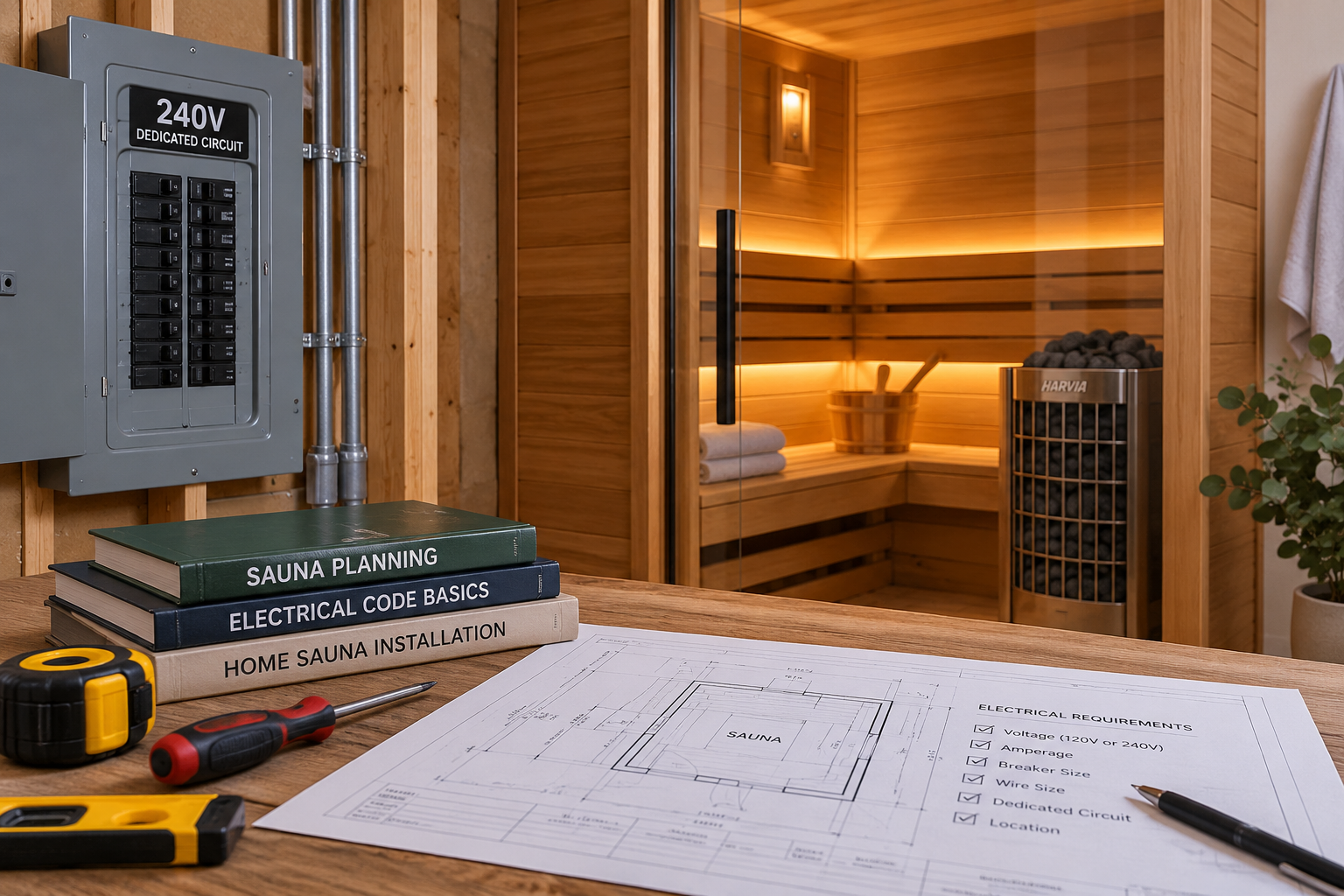
120V vs. 240V Sauna Electrical Requirements
One of the first things to determine when planning a home sauna is whether it requires 120-volt or 240-volt electrical service. The answer depends mainly on the type of sauna, heater output and size of the sauna room.
Smaller infrared saunas are often designed to operate on a standard 120V household circuit, while traditional electric sauna heaters typically require a dedicated 240V circuit. Larger infrared saunas may also require 240V power, so you should always verify the electrical specifications for the exact sauna or heater before purchasing.
| Sauna Type | Typical Voltage | Typical Setup |
| Small infrared sauna | 120V | Standard or dedicated circuit* |
| Larger infrared sauna | 240V | Dedicated circuit |
| Traditional electric sauna | 240V | Dedicated circuit |
| Wood-burning sauna | No heater circuit | Other electrical may still be needed |
Important: Electrical requirements vary by manufacturer and model. Always follow the sauna or heater manufacturer’s specifications, and have a qualified electrician confirm the required circuit before installation.
Sauna Breaker Size and Amperage Requirements
The breaker size required for a sauna depends primarily on the heater’s electrical load. Electric sauna heaters are commonly available in sizes ranging from about 4.5 kW to 12 kW or more, and the required amperage increases as heater output increases.
For example, a 6 kW heater operating at 240V draws about 25 amps, while a 9 kW heater draws about 37.5 amps. However, the breaker and wire size should not be selected from these calculations alone. Always use the circuit requirements specified by the heater manufacturer and have the installation completed or verified by a qualified electrician.
| Heater Output | Voltage | Approx. Current Draw |
| 4.5 kW | 240V | 18.8 amps |
| 6 kW | 240V | 25 amps |
| 8 kW | 240V | 33.3 amps |
| 9 kW | 240V | 37.5 amps |
| 10.5 kW | 240V | 43.8 amps |
Note: These figures show approximate current draw calculated from heater wattage and voltage. They are not recommended breaker or wire sizes. Actual circuit requirements must come from the heater manufacturer’s installation instructions and applicable electrical codes.
Does a Sauna Need a Dedicated Circuit?
Most electric sauna heaters require a dedicated electrical circuit, meaning the circuit serves the sauna heater rather than being shared with other appliances or household loads. This is especially common with 240V traditional sauna heaters.
Some 120V infrared saunas can plug into a standard household receptacle, but that does not necessarily mean the circuit can be shared with other devices. Manufacturers may require a dedicated 15-amp or 20-amp circuit depending on the sauna’s electrical load.
Before installation, check the sauna manufacturer’s electrical specifications for the required voltage, amperage, breaker and connection method. An electrician can also determine whether your existing electrical panel has enough capacity for the new sauna circuit.
Electrical installations must also comply with applicable electrical codes, including requirements established by the National Electrical Code (NEC).
Plug-In vs. Hardwired Saunas
Home saunas can be either plug-in or hardwired, depending on the sauna type and electrical requirements. Smaller infrared saunas are the most likely to use a power cord and receptacle, while traditional electric sauna heaters are commonly hardwired to a dedicated 240V circuit.
A plug-in sauna can simplify installation when the required receptacle and circuit are already available. However, you should not assume that any nearby outlet is suitable. The circuit voltage, amperage and receptacle type must match the sauna manufacturer’s specifications.
Hardwired sauna heaters require permanent electrical connections and should be installed according to the heater manufacturer’s instructions and applicable electrical codes. Because sauna rooms involve high temperatures and specialized equipment, this work is generally best handled by a qualified electrician.
Can Your Electrical Panel Handle a Sauna?
Sauna electrical requirements can place a significant new load on your home’s electrical system, especially with larger electric heaters. Before purchasing a sauna, it’s worth confirming that your electrical panel has enough capacity for the heater and any other sauna equipment.
Having an open breaker space in the panel does not necessarily mean the home’s electrical service has enough capacity for the additional load. A qualified electrician can perform a load calculation and determine whether the existing service and panel can accommodate the sauna.
If additional capacity is needed, the project could require electrical upgrades beyond simply installing a new circuit. Because those upgrades can add substantially to the total installation cost, checking your electrical capacity before ordering the sauna can help prevent an expensive surprise.
How Much Does Sauna Electrical Installation Cost?
Electrical installation costs for a home sauna vary considerably depending on the heater requirements, distance from the electrical panel, accessibility of the wiring route and whether your existing panel can support the additional load.
Installing a new dedicated sauna circuit may cost several hundred dollars for a relatively straightforward installation, while longer wire runs, difficult access or higher-capacity circuits can push the cost considerably higher. If the home requires a panel or service upgrade, the electrical portion of the project can become substantially more expensive.
For initial planning, it is reasonable to budget roughly $500–$2,500+ for sauna electrical work, while recognizing that a simple installation may cost less and a project requiring major electrical upgrades can cost significantly more.
Planning tip: Get an electrician’s estimate before ordering a large 240V sauna if you’re unsure about your home’s available electrical capacity.
Traditional vs. Infrared Sauna Electrical Requirements
Sauna electrical requirements can vary considerably between traditional and infrared models. Traditional saunas use a high-output heater to heat the entire room and sauna stones, while infrared saunas use heating panels that generally operate at lower temperatures and may require less electrical power.
| Electrical Feature | Traditional Sauna | Infrared Sauna |
| Common voltage | 240V | 120V or 240V |
| Connection | Usually hardwired | Plug-in or hardwired |
| Dedicated circuit | Typically required | Often required; varies by model |
| Typical electrical load | Higher | Generally lower |
| Electrician needed | Usually | Depends on model/setup |
Important: These are general comparisons, not installation specifications. Electrical requirements vary by manufacturer, heater size and sauna model, so always follow the specifications supplied with the equipment.
What to Check Before Buying a Sauna
Before ordering a home sauna, review the sauna electrical requirements for the exact model you’re considering. Knowing the voltage, amperage and circuit requirements ahead of time can help you avoid installation delays, unexpected electrical work and additional costs.
- Required voltage: 120V or 240V
- Required amperage and breaker size
- Whether a dedicated circuit is required
- Whether the sauna is plug-in or hardwired
- Required receptacle type, if applicable
- Heater output in kilowatts (kW)
- Whether your electrical panel has sufficient capacity
- Distance from the electrical panel to the sauna location
- Any electrical requirements for lighting, controls or accessories
- Whether permits or electrical inspections are required locally
If you’re considering a traditional electric sauna or a larger 240V infrared sauna, having an electrician review these requirements before you buy can give you a much clearer picture of the true installation cost.
Sauna Electrical Requirements FAQs
Does a sauna need 220V or 240V?
Sauna electrical requirements vary by model, but most traditional electric sauna heaters used in U.S. homes require 240V power. You may sometimes see this casually referred to as 220V, but you should use the voltage and circuit requirements specified by the sauna or heater manufacturer.
Can I plug a sauna into a regular outlet?
Some smaller infrared saunas are designed to plug into a standard 120V receptacle. Traditional electric sauna heaters and larger infrared saunas commonly require 240V power and may need to be hardwired. Always check the specifications for the exact model.
Does a sauna need its own breaker?
Most traditional electric sauna heaters require a dedicated circuit and breaker. Some infrared saunas also require a dedicated circuit even when they operate on 120V. Follow the manufacturer’s circuit requirements.
How many amps does a sauna use?
It depends on the sauna and heater. For example, a 6 kW heater at 240V draws approximately 25 amps, while a 9 kW heater draws approximately 37.5 amps. These figures represent current draw, not recommended breaker sizes.
Do I need an electrician to install a sauna?
For a hardwired electric sauna heater or a new 240V circuit, a qualified electrician should generally handle the electrical installation. A plug-in infrared sauna may not require new wiring if the correct receptacle and suitable circuit are already available.
Can my existing electrical panel support a sauna?
Possibly, but available breaker space alone doesn’t determine whether the panel and electrical service have sufficient capacity. An electrician can perform a load calculation and determine whether your existing system can accommodate the sauna.
Plan Your Sauna Before You Buy
Electrical requirements are only one part of planning a home sauna. Before choosing a model, consider the sauna type, available space, heater size, installation requirements and total project cost so you know what the project will involve before making a purchase.