
Traditional saunas deliver the classic high-heat sauna experience using an electric or wood-burning heater to warm the room and sauna stones. This guide will help you understand how traditional saunas work, what they cost, how much space and power they require, and what to consider before buying one for your home.
What Is a Traditional Sauna?
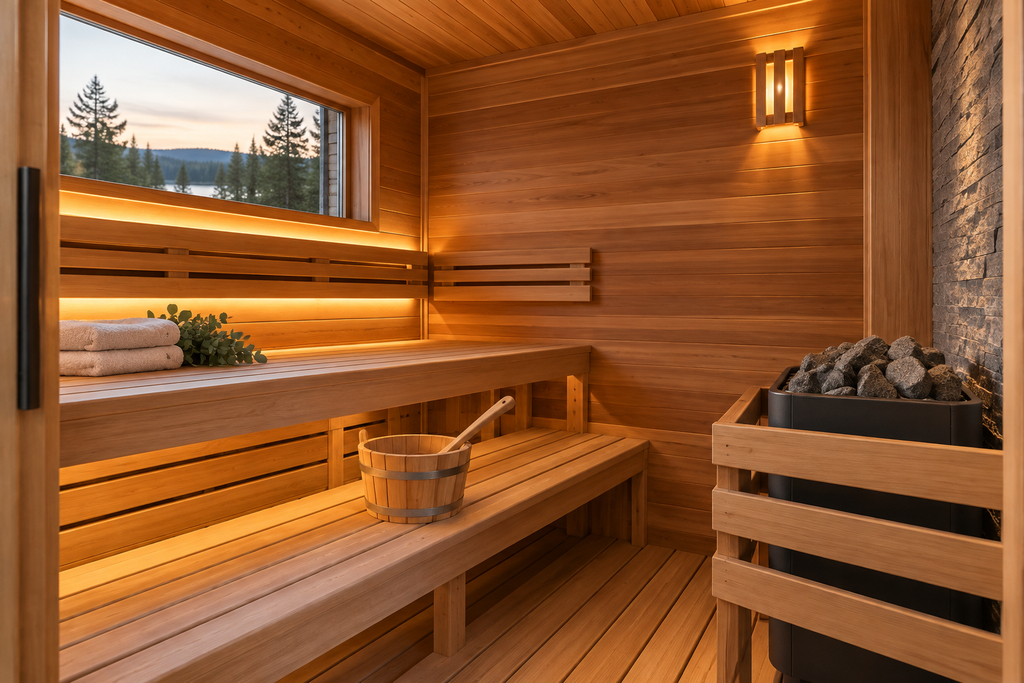
A traditional sauna heats the air inside an enclosed room, typically using an electric or wood-burning heater topped with sauna stones. As the room heats up, temperatures commonly reach around 150°F to 195°F.
Unlike infrared saunas, which use infrared heaters to warm your body more directly, traditional saunas heat the surrounding air first. Water can also be poured over the heated stones to create short bursts of steam and temporarily increase the humidity.
For homeowners who want the classic sauna experience—high heat, wood interiors and the ability to use sauna stones—a traditional sauna is usually the starting point.
How Traditional Saunas Work
Traditional saunas use a heater to raise the temperature of both the room and a bed of sauna stones. Most home installations use an electric sauna heater, although wood-burning heaters remain popular for outdoor saunas and locations where electrical service is limited.
As the stones heat up, they store and radiate heat throughout the sauna. Pouring a small amount of water over the hot stones produces a burst of steam—often called löyly—which briefly raises the humidity and makes the heat feel more intense.
Electric vs. Wood-Burning Sauna Heaters
The heater is one of the most important decisions when planning a traditional sauna. For most homes, the choice comes down to an electric heater or a wood-burning stove.
Electric Sauna Heaters
Electric heaters are the most common choice for home saunas because they’re convenient, easy to control and don’t require a chimney or firewood.
- Easy temperature control
- No chimney or venting for combustion
- Convenient for frequent use
- Requires a properly sized electrical circuit
- Best choice for most indoor home saunas
Wood-Burning Sauna Heaters
Wood-burning heaters provide a more traditional sauna experience and are especially well suited to outdoor saunas where a chimney can be properly installed.
- No electrical heater circuit required
- Traditional fire-heated sauna experience
- Works well for outdoor and remote saunas
- Requires a chimney and proper clearances
- Requires firewood and more hands-on operation
Traditional Sauna Electrical Requirements
Most residential electric sauna heaters require a dedicated 240-volt circuit, although the exact electrical requirements depend on the heater size and manufacturer. Larger sauna rooms generally require higher-output heaters and therefore greater electrical capacity.
Before buying a sauna or heater, check the manufacturer’s specifications and have a qualified electrician confirm that your home’s electrical panel can support the required circuit. Planning this before purchase can prevent unexpected installation costs later.
See our complete Sauna Electrical Requirements guide for more information on voltage, dedicated circuits, amperage and electrical panel capacity.
Traditional Sauna Size and Heater Sizing
A traditional sauna heater needs to be matched to the size of the sauna room. Heater output is typically rated in kilowatts (kW), with larger rooms requiring more powerful heaters to reach and maintain proper sauna temperatures.
As a general starting point, many manufacturers size electric sauna heaters at roughly 1 kW for every 45–50 cubic feet of sauna space. However, glass doors, windows, masonry and other uninsulated surfaces can increase the heater capacity required.
| Sauna Room Volume | Approximate Heater Size |
| Up to 250 cu. ft. | 4.5–6 kW |
| 250–350 cu. ft. | 6–8 kW |
| 350–500 cu. ft. | 8–10.5 kW |
| 500–650 cu. ft. | 10.5–12 kW |
Heater sizing varies by manufacturer and sauna construction. Always use the heater manufacturer’s room-volume specifications when selecting a heater, especially when the sauna includes significant glass, masonry or other uninsulated surfaces.
For a more precise estimate, you can also use Harvia’s sauna heater sizing calculator, which accounts for room dimensions and uninsulated surfaces.
How Much Does a Traditional Sauna Cost?
Traditional home saunas can range from a few thousand dollars for a basic prefabricated kit to well over $10,000 for a larger or custom-built sauna. The final price depends on the sauna size, heater, materials, electrical work and whether you install it yourself or hire a contractor.
For many homeowners, a complete traditional sauna project falls somewhere in the $4,000–$12,000+ range. Basic DIY sauna kits can come in below that, while larger outdoor models, premium materials and custom construction can cost considerably more.
| Cost Item | Typical Range |
| Sauna kit / materials | $2,000–$8,000+ |
| Electric sauna heater | $500–$2,000+ |
| Electrical work | $500–$2,500+ |
| Professional installation | $1,000–$5,000+ |
| Typical complete project | $4,000–$12,000+ |
Keep in mind: These are general planning ranges. Some sauna kits include the heater, while others do not, and installation and electrical costs can vary significantly depending on your home, location and project requirements.
Traditional Sauna Installation and Placement
Traditional saunas can be installed indoors or outdoors, but the location needs to accommodate the sauna’s heat, electrical requirements and ventilation. Indoor saunas are commonly installed in bathrooms, basements, home gyms and dedicated wellness spaces, while outdoor saunas can be installed on suitable patios, concrete slabs or other properly prepared foundations.
Before choosing a location, consider access to electrical service, the heater manufacturer’s required clearances, ventilation and the surface beneath the sauna. Wood-burning heaters also require additional planning for the chimney, combustion clearances and local building requirements.
Indoor vs. Outdoor Traditional Saunas
Indoor Traditional Saunas
Indoor saunas provide convenient year-round access and can be incorporated into bathrooms, basements, home gyms and other suitable interior spaces.
- Protected from weather
- Convenient year-round access
- Usually paired with an electric heater
- Requires appropriate ventilation
- Flooring should tolerate heat and moisture
Outdoor Traditional Saunas
Outdoor saunas provide more flexibility when indoor space is limited and work especially well for backyard sauna cabins and other dedicated structures.
- Doesn’t consume indoor living space
- Electric or wood-burning heaters can be used
- Requires a stable, level foundation
- Structure must withstand local weather
- Electrical service or chimney must be planned
Traditional Sauna Pros and Cons
Traditional saunas provide the classic sauna experience, but they require more planning and typically more power than infrared models. Here are the main advantages and tradeoffs to consider.
Pros of Traditional Saunas
- Classic high-heat sauna experience
- Sauna stones allow bursts of steam and humidity
- Electric and wood-burning heater options
- Wide range of sizes and configurations
- Excellent choice for indoor or outdoor installations
- Authentic wood-lined sauna atmosphere
Cons of Traditional Saunas
- Typically requires more energy to heat the sauna room
- Electric models often require a dedicated 240V circuit
- Longer warm-up time than many infrared saunas
- Installation can be more involved
- Wood-burning models require a chimney and firewood
- Generally more expensive than entry-level infrared saunas
Traditional Sauna vs. Infrared Sauna
Traditional and infrared saunas can both provide a relaxing home sauna experience, but they produce heat in very different ways. Traditional saunas heat the air inside the room to high temperatures, while infrared saunas use infrared heaters to warm the body more directly at lower air temperatures.
The better choice depends largely on the type of sauna experience you prefer, your available space, electrical setup and budget.
| Feature | Traditional Sauna | Infrared Sauna |
| Heat source | Electric or wood-burning heater | Infrared heating panels |
| Typical temperature | 150°F–195°F | 110°F–150°F |
| Humidity | Low, with steam added over stones | Generally dry |
| Warm-up time | About 30–60 minutes | About 10–30 minutes |
| Electrical needs | Often dedicated 240V circuit | Many smaller models use 120V |
| Installation | More planning typically required | Often simpler |
| Typical experience | Hotter, classic sauna heat | Lower-temperature radiant heat |
Temperature, warm-up time and electrical requirements vary by sauna size and manufacturer. Always check the specifications for the model you’re considering.
Which Is Better: Traditional or Infrared?
Choose a traditional sauna if you want the classic high-heat sauna experience, the ability to pour water over heated stones and the option of an electric or wood-burning heater. Traditional saunas are especially appealing if the sauna itself—the heat, wood interior and steam from the stones—is an important part of the experience.
An infrared sauna may be a better fit if you prefer lower temperatures, faster warm-up times or a potentially simpler installation. Neither type is automatically better for every home—the right choice depends on the experience you want and the practical requirements of your space.
Is a Traditional Sauna Right for You?
A traditional sauna is a strong choice if you want high temperatures, heated sauna stones and the classic wood-lined sauna experience. It can work particularly well if you have enough space for a dedicated sauna and are comfortable planning for the electrical, ventilation and installation requirements.
A traditional sauna may be right for you if:
- You prefer hotter sauna temperatures
- You want to pour water over sauna stones for bursts of steam
- You want the option of an electric or wood-burning heater
- You have space for a permanent indoor or outdoor sauna
- You’re willing to plan for electrical and installation requirements
- You value the classic sauna experience over the simplest possible installation
If convenience, lower operating temperatures or easier installation are higher priorities, an infrared sauna may be worth considering instead.
Traditional Sauna FAQs
How hot does a traditional sauna get?
Most traditional saunas operate between about 150°F and 195°F, although the preferred temperature varies by user and sauna setup.
Do traditional saunas need a 240V circuit?
Most residential electric sauna heaters require a dedicated 240V circuit, but requirements vary by heater size and manufacturer. Smaller specialty heaters may differ, so always check the specifications before installation.
Can you pour water on the rocks in a traditional sauna?
Yes, when the heater and sauna stones are designed for it. Pouring a small amount of water over the heated stones creates a brief burst of steam and increases the perceived heat and humidity.
How long does a traditional sauna take to heat up?
Many traditional saunas take approximately 30–60 minutes to reach operating temperature. Room size, heater output, insulation and starting temperature can all affect warm-up time.
Can a traditional sauna be installed outdoors?
Yes. Traditional saunas work well outdoors when the structure is designed for exterior use and installed on a suitable foundation. You’ll also need to plan for electrical service or, with a wood-burning heater, the appropriate chimney and clearances.
Ready to Plan Your Home Sauna?
If a traditional sauna sounds like the right fit, the next step is figuring out the size, heater, electrical requirements and total project cost before you buy. Our planning and buying guides can help you work through those decisions.