
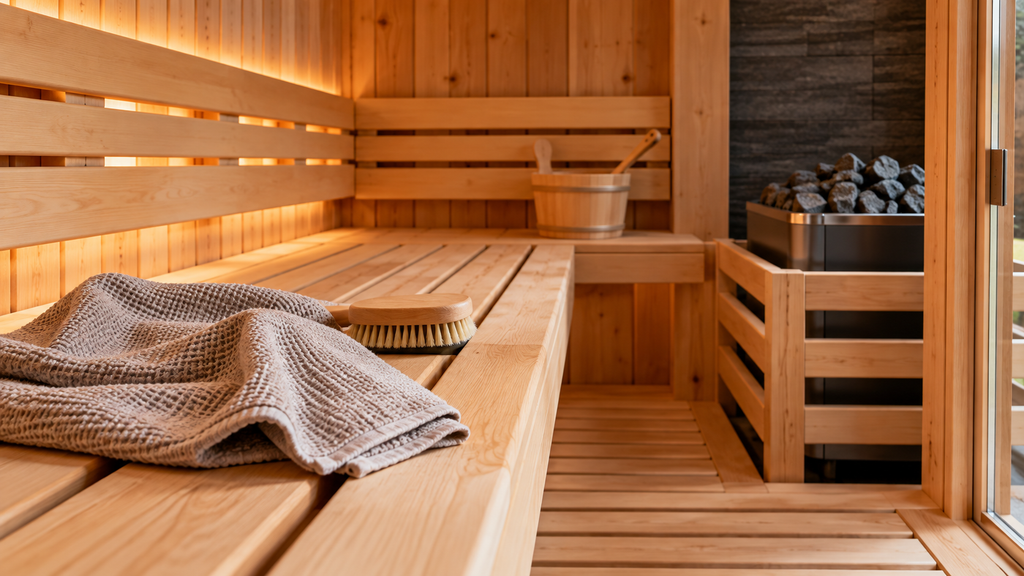
A home sauna does not need complicated maintenance, but it does need consistent care. Sweat, moisture, dust, mineral residue and normal wear can gradually affect the benches, floor, heater, stones and other surfaces if they are ignored.
The most important habits are simple: protect the benches during use, wipe away moisture and dirt, let the sauna dry thoroughly, clean wood with products and methods appropriate for the sauna, and inspect the heater and stones on a regular schedule.
There is one important catch: sauna manufacturers do not all give identical cleaning instructions. Recommendations for cleaning agents, drying procedures and wood treatments can differ by manufacturer and sauna type.
The instructions for your exact sauna and heater should always take priority over general maintenance advice.
Quick Sauna Maintenance Schedule
| When | Maintenance Task |
|---|---|
| After each use | Remove towels and accessories, wipe visible moisture or perspiration, clean obvious dirt, and ventilate/dry the sauna. |
| Regularly | Sweep or vacuum debris, clean the floor and glass, inspect benches and wood surfaces, and check for persistent moisture or odors. |
| Every few weeks for many infrared cabins | Perform a more thorough interior cleaning if recommended by the manufacturer. |
| 1–3 times per year | Deep-clean a typical family traditional sauna; frequency depends on use. |
| At least annually | Inspect and re-stack traditional sauna heater stones; remove broken or deteriorated stones. |
| Once or twice per year when appropriate | Renew paraffin-oil treatment on compatible untreated wood if recommended by the sauna manufacturer. |
| Seasonally / annually outdoors | Inspect exterior wood, finish, roof/weather protection, drainage and signs of moisture damage. |
| As needed | Address stains, inspect doors and benches, tighten permitted hardware, and arrange qualified service for electrical or heater problems. |
This is a planning schedule rather than a substitute for the owner’s manual. A heavily used sauna may need attention much more often than a lightly used residential sauna.
What to Do After Every Sauna Session
The easiest way to keep a sauna clean is to prevent sweat and moisture from sitting on the wood. Use a clean towel or sauna seat cover on the bench during a session. This reduces the amount of perspiration and body oils that reach the wood.
- Remove towels, seat covers and other damp textiles.
- Wipe visible perspiration, water droplets and dirt from benches and other surfaces with a clean damp cloth when appropriate for the sauna.
- Remove or dry standing water rather than allowing it to pool on wood.
- Follow the sauna manufacturer’s drying procedure.
- Allow the interior to dry fully before leaving the sauna closed for an extended period.
Drying procedures differ between manufacturers. Some traditional-sauna manufacturers recommend briefly using residual heater heat while ventilating the room. Infrared manufacturers commonly recommend leaving the cabin open after the final session so it can air out.
Do not leave the sauna damp. Use the drying procedure specified for your sauna rather than assuming every sauna should be dried the same way.
How Often Should You Deep-Clean a Sauna?
There is no universal cleaning calendar that fits every household. Harvia says a typical family sauna can receive basic cleaning approximately one to three times per year. That does not mean waiting months to wipe away sweat, dirt or spills. It refers to deeper cleaning in addition to routine after-use care.
Infrared cabins can follow a different schedule. Clearlight recommends a light wipe-down after use and a more thorough cleaning approximately every two weeks.
Usage matters. A sauna used by several people every day will need more frequent attention than one used once or twice a week by a single household.
- Visible grime
- Persistent odors
- Sweat stains
- Dirt accumulation
- Surfaces remaining damp
- Mold or mildew
- Debris beneath benches or floor grids
How to Clean Sauna Benches and Interior Wood
Benches receive the most direct exposure to perspiration, skin oils and moisture. For routine cleaning, start with the least aggressive method allowed by the sauna manufacturer.
- A clean damp cloth
- Warm water
- A soft brush
- A mild manufacturer-approved cleaner
- A purpose-made sauna cleaner
For deeper cleaning, Harvia recommends cleaning compatible benches with warm water and an appropriate cleaning solution using a soft brush. Brushing along the wood grain can help clean the surface without unnecessarily roughening it.
SaunaLife advises wiping benches and interior cladding with a damp cloth while avoiding harsh chemicals and excessive water.
Do not assume that an ordinary bathroom cleaner or household disinfectant is safe simply because it kills germs. Sauna wood is exposed to unusually high temperatures and direct skin contact, and manufacturers differ in the products they permit.
Can You Sand Sauna Benches?
Light sanding can be appropriate for stubborn surface stains on some unfinished sauna woods. Harvia allows light sanding of stubborn dark stains after compatible bench wood has dried. Clearlight also identifies light sanding with fine-grit sandpaper as an option for perspiration-darkened wood in its infrared cabins.
Sand only when permitted by the sauna manufacturer. Use a light touch, follow the grain where appropriate, remove sanding dust and follow any required wood-treatment instructions afterward.
Should You Oil Sauna Benches?
Some untreated sauna woods benefit from sauna-appropriate paraffin oil, but oiling should not be treated as a universal requirement.
Harvia recommends paraffin oil for compatible untreated bench materials. The treatment reduces the amount of moisture and dirt absorbed by the wood. For compatible benches, Harvia recommends renewing treatment approximately once or twice per year depending on sauna use.
Because oil can deepen the appearance of natural wood, test it on an inconspicuous area first.
Do not apply ordinary furniture oil, stain, paint, polyurethane or varnish to hot-room wood unless the sauna manufacturer specifically approves the product and application. Finnleo advises against painting, varnishing or staining sauna interiors, allowing the wood to breathe naturally.
Cleaning the Sauna Floor
Floor maintenance depends on the material beneath your feet. For tile, concrete or another washable hard surface, sweep or vacuum loose debris and clean the floor using a method compatible with the floor and surrounding sauna materials.
If the sauna has removable wooden duckboards or floor grids, periodically lift them so you can clean and dry underneath. SaunaLife specifically recommends removing wooden floor grids regularly, cleaning debris below them and wiping the grids with a damp cloth and gentle wood cleaner without excessive water.
Infrared cabins usually need less water. Vacuum accumulated dust and debris as needed and wipe compatible surfaces with a damp cloth or approved cleaner.
Avoid turning routine sauna cleaning into a washdown unless the sauna and floor system were specifically designed for it. Excess water can enter wood joints and other areas that are difficult to dry.
Related: Sauna Flooring & Drainage Guide
How to Clean Sauna Glass
Sauna doors and windows collect fingerprints, dust and water spots like other glass surfaces. Clean sauna glass only when it is cool enough to handle safely.
Use a cleaning method compatible with the sauna and keep overspray away from wood, heaters and electronics.
For infrared cabins, Clearlight recommends applying glass cleaner to the cleaning cloth outside the sauna rather than spraying the product directly inside the cabin. This helps prevent overspray from reaching heaters or wood.
For mineral or limescale residue near a traditional heater, follow the heater manufacturer’s instructions for that particular surface rather than applying a general acid cleaner to every sauna component.
Sauna Heater Maintenance
Always turn the heater off and allow it to cool before cleaning or inspection.
- Keep accessible exterior surfaces clean
- Monitor the sauna stones
- Look for obvious deterioration
- Keep required clearances unobstructed
- Follow the manufacturer’s maintenance schedule
Do not open electrical compartments or attempt electrical repairs unless the manufacturer specifically identifies the task as owner-serviceable.
If a heater behaves abnormally, repeatedly trips protection, has visibly damaged components or shows signs of electrical trouble, stop treating the problem as a cleaning issue. Follow the manufacturer’s troubleshooting procedure and use a qualified technician or electrician where required.
Related: Best Sauna Heaters · Sauna Electrical Requirements
Sauna Stone Maintenance
Sauna stones are consumable components. Repeated heating and cooling gradually weaken them. Harvia recommends checking and re-stacking sauna stones at least annually. HUUM also instructs owners to inspect stone condition annually, remove broken pieces and replace stones when necessary.
- Turn the heater off and allow it to cool completely.
- Remove stones according to the heater manufacturer’s instructions.
- Remove fragments and debris.
- Inspect stones for cracking, crumbling or deterioration.
- Clean reusable stones if the manufacturer permits it.
- Replace deteriorated stones with the type and size specified for the heater.
- Re-stack the stones according to the heater manufacturer’s instructions.
Do not simply dump stones into an electric heater. Proper placement preserves airflow and helps prevent inappropriate pressure or contact around heating elements.
If fragments begin collecting beneath the heater, inspect the stone load sooner rather than waiting for the annual inspection.
Ventilation Is Part of Sauna Maintenance
A sauna that cannot dry properly is much harder to keep clean. After bathing, ventilation helps remove residual moisture from wood and other surfaces.
- Odors
- Staining
- Mildew
- Mold
- Wood deterioration
The correct ventilation configuration depends on the sauna and heater. Mechanical and gravity ventilation systems can use different intake and exhaust locations, and some saunas have a separate drying vent.
Do not permanently change vent positions to solve a cleaning problem without checking the heater and sauna instructions.
Related: Sauna Ventilation Guide
What to Do About Mold or Mildew
Visible mold or recurring mildew should be treated as a moisture-management problem as well as a cleaning problem.
- Post-session drying
- Ventilation
- Hidden water
- Floor drainage
- Removable grids
- Areas underneath benches
- Exterior water intrusion on outdoor saunas
Do not assume that one mold-cleaning chemical is safe for every sauna. Manufacturer recommendations differ. Some published sauna guidance permits cleaning methods that other manufacturers warn can discolor or damage their wood.
- Follow the cleaning instructions for the exact sauna or wood system.
- Do not mix cleaning chemicals.
- Do not apply strong disinfectants, bleach or mold-treatment chemicals to sauna wood unless the manufacturer specifically approves them.
- Correct the moisture source so the problem does not simply return.
If growth is extensive, repeatedly returns, extends behind finished surfaces or is associated with building water damage, consider professional assessment rather than repeatedly treating the visible surface.
Infrared Sauna Cleaning and Maintenance
Infrared saunas generally operate with less humidity than traditional saunas, so their maintenance routine differs.
Clearlight recommends wiping its sauna interiors after use and allowing the cabin to air out. It recommends a more thorough cleaning approximately every two weeks.
Use towels on the bench and beneath your feet to reduce perspiration entering the wood. Vacuum dust and debris as needed.
Infrared emitters, controls, speakers and other electrical components should not be saturated with cleaner or water. Allow heaters to cool before permitted surface cleaning and follow the manufacturer’s service instructions for heater guards and electronic components.
Do not automatically copy traditional-sauna maintenance instructions into an infrared cabin.
Related: Infrared Sauna Guide · Best Infrared Saunas
Wood-Burning Sauna Maintenance
A wood-burning sauna adds a combustion appliance and chimney to the normal sauna-maintenance list.
In addition to cleaning benches, floors and interior wood, inspect the stove and chimney system according to their manufacturers’ maintenance schedules.
A deteriorated or damaged firebox is a safety issue rather than a cosmetic maintenance problem.
Ash removal, chimney inspection and cleaning, door and seal condition, corrosion and required clearances should follow the exact stove and chimney instructions and applicable requirements. Do not modify a stove, flue or chimney based on generic sauna advice.
Keep combustible materials and drying textiles away from heaters and other hot surfaces.
Related: Traditional Saunas
Outdoor Sauna Maintenance
Outdoor saunas have everything an indoor sauna must manage plus exposure to weather.
- Exterior cladding
- Protective finishes
- Roof surfaces
- Doors
- Seals
- Foundation or base
- Site drainage
- Areas where vegetation contacts the structure
Look for peeling or failed finishes, water collecting against the structure and signs that the sauna has moved out of level.
Some SaunaLife outdoor documentation recommends annual exterior cleaning and periodic renewal of appropriate protective finishes. Follow the maintenance schedule for the exact outdoor sauna because exterior materials and finishes differ substantially.
Do not apply an exterior coating to the hot-room interior simply because it is appropriate for the outside of the structure. Keep site drainage functioning so rainwater and runoff move away from the sauna.
Related: Outdoor Sauna Guide
What Not to Do When Cleaning a Sauna
- Do not pressure-wash sauna wood.
- Do not flood wooden benches or interior paneling with running water unless the manufacturer explicitly allows that method.
- Do not assume harsh household disinfectants are safe for sauna wood.
- Do not mix cleaning chemicals.
- Do not paint, stain or varnish hot-room wood unless specifically approved by the sauna manufacturer.
- Do not clean a hot heater.
- Do not spray liquid directly onto electrical controls, infrared emitters or electronic components.
- Do not ignore crumbling sauna stones.
- Do not leave wet towels or seat covers inside after use.
- Do not close a wet sauna and assume the remaining heat will solve the moisture problem.
- Do not use a general maintenance guide as a substitute for the instructions supplied with the exact sauna and heater.
Signs Your Sauna Needs More Than Routine Cleaning
Cleaning will not fix every sauna problem.
- Persistent mold or mildew that returns after cleaning
- Wood that remains damp for long periods
- Soft, rotten or structurally damaged wood
- Loose or unstable benches
- Damaged heater components
- Repeated electrical faults or breaker trips
- Burned, melted or abnormally discolored material near electrical equipment
- A wood-burning heater with visible firebox damage
- Damaged chimney or flue components
- A door that no longer operates correctly
- Large amounts of broken sauna-stone debris
- Water entering through the roof, walls or foundation
Electrical, structural and combustion-system problems may require qualified professional service rather than more aggressive cleaning.
Annual Sauna Maintenance Checklist
- Deep-clean benches and interior wood using an approved method.
- Inspect benches, backrests and fasteners.
- Inspect floor grids and clean underneath removable sections.
- Check glass and door operation.
- Inspect ventilation openings for blockage.
- Inspect sauna stones and re-stack or replace them as required.
- Inspect the heater exterior and visible components.
- Renew approved wood treatment where required.
- For outdoor saunas, inspect exterior finish, roof/weather protection and site drainage.
- For wood-burning saunas, complete the stove and chimney maintenance required by their manufacturers.
- For infrared saunas, inspect heaters, controls and hardware according to the manufacturer’s maintenance schedule.
- Record developing problems so they can be corrected before becoming larger repairs.
Frequently Asked Questions
How often should you clean a sauna?
Wipe away sweat, moisture and obvious dirt after use and allow the sauna to dry. Deep-cleaning frequency depends on sauna type and usage. Harvia says a family traditional sauna may receive basic cleaning one to three times per year, while Clearlight recommends more thorough infrared-cabin cleaning approximately every two weeks.
What is the best thing to clean a sauna with?
Use the cleaning method and product approved by the sauna manufacturer. Depending on the sauna, this may mean water and a soft cloth or brush, a compatible mild cleaner or a purpose-made sauna cleaner. Avoid assuming that strong household disinfectants are safe for hot-room wood.
Can you use vinegar to clean a sauna?
Do not treat vinegar as a universal sauna cleaner. Harvia discusses water with vinegar or citric acid for certain limescale stains on suitable heater surfaces, but that does not mean vinegar should be used on every bench, wall, finish, heater or infrared component.
Can you use bleach in a sauna?
Do not use bleach as a universal sauna-cleaning method. Manufacturer guidance differs, and some sauna-care instructions specifically warn that disinfectants can bleach or damage wood. Use a bleach-based treatment only when the manufacturer of the exact sauna or surface approves it.
Should you oil sauna benches?
Some untreated sauna benches can be protected with sauna-appropriate paraffin oil. Harvia recommends paraffin oil for compatible untreated bench wood and suggests renewing treatment approximately once or twice per year depending on use. Follow the sauna manufacturer’s instructions before applying any treatment.
How often should sauna stones be replaced?
There is no fixed replacement date for every heater. Inspect them at least annually where recommended by the heater manufacturer and replace stones that are cracked, crumbling or otherwise deteriorated. Heavy use may require more frequent inspection.
How do you prevent mold in a sauna?
Keep the sauna clean, remove wet textiles after use, wipe excess moisture and dry and ventilate the room according to the manufacturer’s instructions. If mold repeatedly returns, determine why the area remains damp rather than relying only on repeated surface cleaning.
Is an infrared sauna easier to maintain?
Infrared cabins generally operate with less humidity and do not use the same water-on-stones system as traditional saunas, so routine cleaning can be relatively simple. They still need perspiration wiped away, floors and benches cleaned, adequate airing and model-specific care for heaters and electronics.
Bottom Line
Good sauna maintenance is mostly about consistency rather than aggressive cleaning. Protect the benches, remove sweat and standing moisture, let the sauna dry, clean surfaces using methods appropriate for their materials, and inspect the heater and stones before small problems become large ones.
The most important rule is also the simplest: follow the instructions for the exact sauna and heater you own.
Manufacturer recommendations differ, particularly around cleaning chemicals, wood treatments and drying procedures. A few minutes of routine care after each session, combined with periodic deep cleaning and an annual inspection, can keep a home sauna cleaner, easier to maintain and better prepared for years of use.