
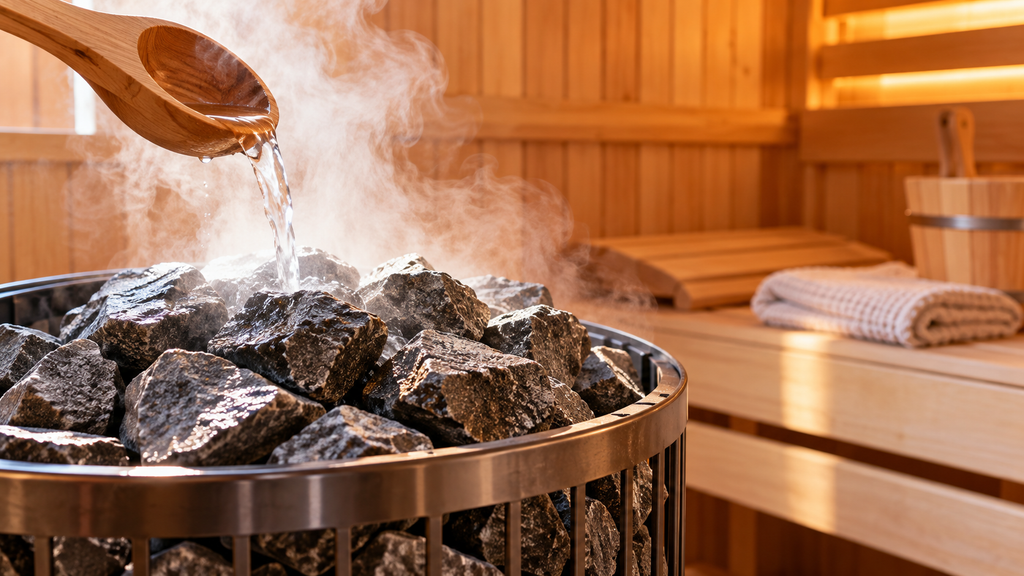
Sauna heater stones do more than fill the top of a heater. They absorb and release heat, help turn water into steam, and influence how evenly a sauna warms up. Using the wrong stones—or stacking the right stones incorrectly—can also shorten the life of an electric heater.
Whether you are installing a new sauna, replacing worn stones, or troubleshooting slow heat-up times, this guide explains how to choose, arrange, inspect, and replace sauna heater stones.
The most important rule: Always follow the stone type, size, quantity, and placement instructions for your exact heater model. Recommendations that work for one Harvia or HUUM heater may not work for another.
What Are Sauna Heater Stones?
Sauna heater stones are specially selected rocks designed to withstand repeated heating and cooling inside a sauna heater.
In a traditional sauna, the heater warms the stones. When water is poured onto hot stones, some of that water vaporizes, creating the burst of steam commonly called löyly in Finnish sauna culture.
The stones also act as a thermal mass. They store heat and release it over time, contributing to the sauna’s overall heat and steam experience.
Not every rock can safely perform this job. Sauna stones must tolerate substantial temperature changes without readily crumbling or breaking apart.
What Are the Best Types of Sauna Stones?
For most homeowners, the best starting point is a set of manufacturer-approved stones made specifically for sauna heaters.
Olivine Diabase
Olivine diabase is one of the most widely used sauna stone materials. It is a dense, durable rock that stores and releases heat effectively. Harvia offers olivine diabase in several sizes and shapes, including angular and rounded varieties.
Best for: Many traditional electric and wood-burning sauna heaters, provided the size and shape match the heater manual.
Rounded Olivine Diabase
Rounded sauna stones have smoother surfaces and a different appearance from angular stones. They can allow water to travel farther into the stone bed, which may produce a softer-feeling steam experience. HUUM recommends rounded olivine diabase for many of its exposed-stone heaters.
However, rounded stones are not automatically the best choice for every heater. Some models have specific stone-shape requirements.
Best for: Heaters designed for rounded stones, including many HUUM models and selected Harvia models.
Black Vulcanite
Black vulcanite is another manufacturer-supplied sauna stone option. Harvia offers it in sizes intended for different heater designs. It provides a darker appearance while serving the same basic heat-storage and steam-generation functions.
Best for: Compatible heaters when a darker stone appearance is preferred.
Heat-Treated Sauna Stones
Some manufacturers sell heat-treated stones designed for demanding use. For example, Harvia‘s Elite Pro Heavy Duty stones are heat-treated olivine diabase intended for intensive sauna use, including commercial settings.
They may be worth considering for frequently used saunas, but they are not necessary for every residential heater.
Decorative Sauna Stones
Decorative stones are not the same as the main stones that fill a heater. Harvia offers certain decorative white and red granite stones specifically for the top layer of compatible heaters. Those products come with placement and quantity restrictions.
Do not substitute ordinary decorative landscaping stones for sauna heater stones.
Can You Use Rocks From Outside in a Sauna Heater?
No—not as a general DIY shortcut. A rock collected from a river, beach, garden, or landscaping supplier may look similar to a sauna stone, but its appearance does not establish that it is suitable for repeated high-temperature use.
Unknown stones may contain minerals, internal weaknesses, or other characteristics that make them unsuitable for sauna heaters. Use stones that have been selected and sold specifically for sauna-heater applications.
What Size Sauna Stones Do You Need?
The correct size depends on the heater. Two common sizes offered by Harvia are:
| Stone size | Approximate inches | Typical applications |
|---|---|---|
| 5–10 cm | 2–4 inches | Many electric sauna heaters |
| 10–15 cm | 4–6 inches | Wood-burning heaters and selected larger electric heaters |
These are common examples, not universal sizing rules. Some heater designs use smaller stones. Others require rounded stones of a particular diameter. A stone that is too large may not fit correctly around the heating elements, while stones that are too small can settle into spaces where they restrict airflow.
Before ordering, check the heater’s model number and installation manual.
How Many Sauna Stones Do You Need?
There is no reliable stone quantity based on sauna room size alone. The heater manufacturer specifies the required amount, usually by weight. Different heaters with similar power ratings can have dramatically different stone capacities.
For example, HUUM lists approximately:
| HUUM heater | Specified stone capacity |
|---|---|
| DROP | 121 lb |
| HIVE Mini | 331 lb |
| HIVE | 551 lb |
These are manufacturer examples for the specified heater families, not estimates for other models. Verify the exact model and revision before purchasing stones.
A heater with a large exposed stone basket may require hundreds of pounds of stones, while a compact enclosed heater may use far fewer.
Do not estimate the amount by filling the heater until it looks full. Follow the manufacturer’s capacity and stacking instructions.
Angular vs. Rounded Sauna Stones: Which Is Better?
Neither shape is universally superior.
Angular stones have irregular surfaces and can be arranged to create a stable stone bed with useful airflow spaces. They are common in traditional enclosed electric heaters.
Rounded stones provide a smoother appearance and may allow water to penetrate farther into the stone bed. They are particularly popular in exposed-stone designs.
Harvia also describes arrangements that use angular stones lower in the heater and rounded stones near the top, where permitted.
The correct choice depends on the heater design. Never change stone shape simply to imitate a photograph of another sauna.
How to Stack Sauna Stones Correctly
Stone placement affects heating performance, airflow, and safety. Before starting, switch off the heater, disconnect power where instructed, and allow the heater and stones to cool completely.
Step 1: Check the Heater Manual
Confirm the approved stone material, size, quantity, and any model-specific stacking instructions. Do not assume that instructions for another heater from the same manufacturer apply to yours.
Step 2: Rinse New Stones
Rinse stones with clean water to remove loose dust and grit, unless the manufacturer gives different preparation instructions. Allow them to drain and dry as directed before placing them in the heater.
Step 3: Place Stones Individually
Set stones into the heater by hand rather than dumping an entire bag into the basket. This gives you more control and helps prevent damage to heating elements. Wear suitable gloves to protect your hands from rough edges.
Step 4: Preserve Airflow
Arrange the stones so that air can move through the heater. Avoid tightly wedging stones together or packing small fragments into every gap. For electric heaters, the stones should not bend or place excessive weight on the heating elements.
Step 5: Protect the Heating Elements
Follow the manufacturer’s instructions for positioning stones around the elements. HUUM specifically requires stones to surround and cover the elements in its applicable exposed-stone designs. The goal is to protect the elements without forcing stones against them.
Step 6: Avoid Overfilling
Do not create a tall mound of stones above the heater or place stones on the heater frame unless the manual explicitly calls for that arrangement. More stones are not automatically better.
Step 7: Perform the Initial Heating Procedure
After stacking, follow the heater manufacturer’s first-use instructions. Some manufacturers recommend an initial heating cycle to remove the natural scent associated with new stones.
How Often Should You Replace Sauna Stones?
Sauna stones gradually deteriorate as they repeatedly heat and cool. How quickly they wear depends on the stone material, heater design, usage frequency, and maintenance. There is no single replacement interval suitable for every sauna heater.
Harvia Maintenance Guidance
Harvia recommends inspecting and rearranging stones at least annually, with more frequent checks for heavily used heaters. Broken, crumbling, or otherwise deteriorated stones should be replaced.
HUUM Maintenance Guidance
HUUM publishes a more specific usage-based schedule for its applicable heaters:
| Usage | Recommended action |
|---|---|
| 100 hours or at least annually | Inspect the stones |
| 200 hours | Rearrange stones and replace cracked ones |
| 400 hours | Replace the full stone set |
These intervals should not be applied automatically to unrelated heater brands. Practical homeowner rule: Put stone inspection on your annual sauna maintenance calendar, then follow any shorter interval specified in your heater manual.
Seven Signs Your Sauna Stones Need Attention
- Cracked stones: Visible fractures indicate deterioration.
- Crumbling stones: Stones that shed pieces should be replaced.
- Stone dust or fragments: Debris beneath or inside the heater can signal wear.
- Unusual discoloration: Changes in stone condition may justify closer inspection.
- Stones settling noticeably: The stone bed may need to be removed and restacked.
- Longer heat-up times: Restricted airflow from damaged or tightly packed stones may contribute.
- Poor steam performance: Deteriorated or incorrectly arranged stones may affect how water vaporizes.
Slow heating and weak steam can also have other causes, including electrical faults or heating-element problems. Do not assume the stones are the only possible explanation.
How to Inspect and Replace Sauna Stones
Inspecting the stones is a manageable homeowner maintenance task when the heater is fully off and cool.
- Turn off the heater and disconnect power according to its manual.
- Allow all stones and metal components to cool completely.
- Remove stones individually, noting how they were arranged.
- Inspect each stone for cracking, crumbling, or significant deterioration.
- Discard damaged stones.
- Remove loose stone fragments and dust from accessible parts of the heater, following the manufacturer’s cleaning instructions.
- Inspect visible heating elements for bending or damage without attempting electrical repairs.
- Rinse reusable stones if directed, and prepare replacement stones.
- Restack using the heater’s approved placement method.
- Confirm that the correct quantity is installed before returning the heater to service.
If you find damaged heating elements, loose electrical components, or anything you cannot identify confidently, stop and consult a qualified professional.
Can You Reuse Old Sauna Stones?
Yes, if they remain sound and the manufacturer permits reuse. Not every stone needs replacement during every inspection.
Reusable stones should be free of significant cracks, crumbling, and other signs of deterioration. However, if your heater manufacturer specifies a complete replacement interval, follow that guidance rather than repeatedly reusing the entire original set.
Can You Clean Sauna Stones?
Yes. Removing dust and loose debris is part of normal stone maintenance. For stones that are otherwise in good condition, rinsing with clean water is generally appropriate when recommended by the manufacturer.
Avoid applying household cleaning chemicals, oils, sealers, or fragrances directly to sauna stones. Cleaning will not repair a cracked or deteriorated stone. Replace damaged stones instead.
Electric vs. Wood-Burning Sauna Heater Stones
Both electric and wood-burning sauna heaters use stones to retain heat and generate steam, but their stone requirements can differ.
Electric Sauna Heaters
Electric heaters commonly position stones around metal heating elements. Proper stacking must allow airflow and prevent damage to those elements. Stone size is particularly important because the rocks must fit within the heater’s designed spaces.
Wood-Burning Sauna Heaters
Wood-burning heaters may use larger stones and different stone arrangements. For example, Harvia offers 10–15 cm angular stones for wood-burning heaters, while smaller stones may be used in certain upper layers.
The exact arrangement still depends on the stove model. Never assume that stones approved for one type of heater are approved for the other.
Common Sauna Stone Mistakes
Using Landscaping Rocks
Ordinary garden or river rocks are not a safe substitute for tested sauna stones.
Buying the Wrong Size
A bag labeled “sauna stones” may still be incompatible with your heater.
Packing Stones Too Tightly
Restricting airflow can reduce performance and contribute to overheating.
Forcing Stones Between Elements
Heating elements can bend or become damaged when stones are wedged into place.
Adding Too Many Stones
Overfilling can interfere with the heater’s designed airflow and clearances.
Ignoring Broken Fragments
Stone debris can accumulate inside the heater and affect airflow.
Never Rearranging Stones
Even durable stones can settle and deteriorate with use. Periodic inspection and restacking help maintain proper operation.
Where to Buy Sauna Heater Stones
Start with your heater manufacturer or an authorized retailer that carries stones approved for your model.
- Heater brand and exact model
- Required stone material and shape
- Required diameter or size range
- Total stone capacity by weight
- Whether the stones are for the main basket or decorative top layer
- Manufacturer warranty restrictions
For homeowners comparing complete heater systems, see our Best Sauna Heaters guide. If you are still selecting heater capacity, use our Sauna Heater Size Calculator before purchasing equipment.
Sauna Heater Stone Maintenance Checklist
- ☐ Confirm the heater’s stone specifications.
- ☐ Turn off power and let the heater cool completely.
- ☐ Inspect stones at the manufacturer’s recommended interval.
- ☐ Remove cracked or crumbling stones.
- ☐ Clear accessible stone dust and fragments.
- ☐ Check for visible heating-element damage.
- ☐ Rinse reusable or replacement stones as instructed.
- ☐ Restack without forcing or tightly packing stones.
- ☐ Maintain the correct total stone quantity.
- ☐ Record the inspection date and any replacements.
Frequently Asked Questions
What are the best rocks for a sauna heater?
Manufacturer-approved sauna stones are the best choice. Olivine diabase is a common option, but the correct material, shape, and size depend on the heater model.
Can I use river rocks in my sauna?
No. Unverified river rocks may not withstand repeated high-temperature use. Choose stones specifically sold and approved for sauna heaters.
How often do sauna stones need replacing?
It depends on the heater and usage. Harvia recommends at least annual inspection and rearrangement. HUUM specifies usage-based maintenance intervals for its applicable heaters, including complete replacement after 400 hours.
Do sauna stones wear out?
Yes. Repeated heating and cooling gradually cause stones to crack, crumble, and settle.
Should sauna stones be packed tightly?
No. The stone bed must allow adequate airflow while meeting the heater manufacturer’s instructions for supporting and covering heating elements.
Can I mix round and angular sauna stones?
Only when the manufacturer permits that arrangement. Some Harvia guidance describes using different shapes in different layers, but other heaters have specific requirements.
Can you pour water on any sauna heater stones?
Only when the heater is designed for water application and the manufacturer permits it. Do not pour water onto electrical components or use a heater in a way its instructions prohibit.
Why is my sauna taking longer to heat up?
Deteriorated stones or restricted airflow may contribute. Other possible causes include heating-element or electrical problems. Inspect the stones first, and seek qualified service if the issue continues.
Final Thoughts
Sauna heater stones are a small detail with a large effect on sauna performance.
Choosing approved stones, using the correct quantity, preserving airflow, and inspecting the stone bed regularly can help protect the heater and maintain a satisfying steam experience.
If you remember only one thing, make it this: the correct stones and stacking method are determined by your specific heater—not by a universal sauna-rock recommendation.
For more sauna ownership advice, read our Sauna Maintenance & Cleaning Guide, Best Sauna Heaters, and Sauna Heater Size Calculator.